Youth Boston Red Sox Yellow Jerseys: The Ultimate Way Youth Fans Own Team Spirit
Youth Boston Red Sox Yellow Jerseys: The Ultimate Way Youth Fans Own Team Spirit
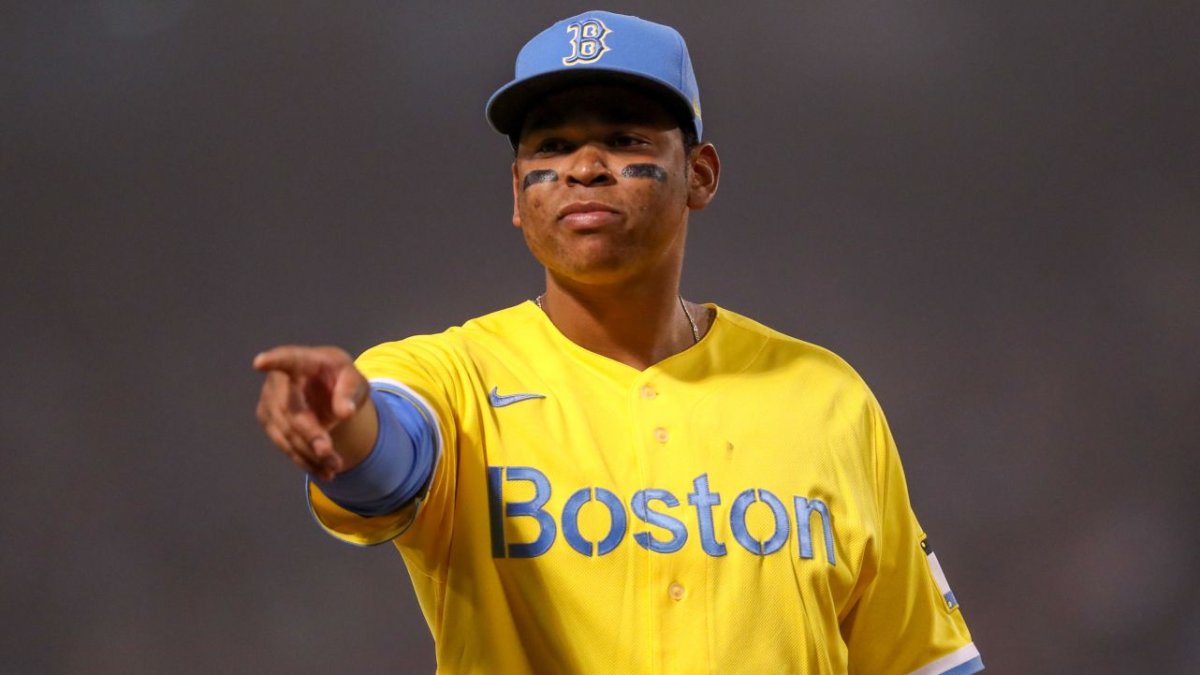
Standing at the intersection of sports culture, youth identity, and baseball tradition, the Youth Boston Red Sox Yellow Jersey has emerged as more than a piece of athletic wear—it is a powerful symbol of belonging, pride, and generational connection. For younger fans across New England, wearing a youth-sized red and yellow jersey isn’t just about matching rosters; it’s an act of devotion, a way to align themselves with a storied franchise and a legacy of grit, excellence, and community. From Little League fields to Fenway Park front rows, these modest yet iconic jerseys have become essential gear for young baseball enthusiasts who see themselves in the team’s heartbeat.
Over the years, manufacturers have refined fit and breathability, ensuring youth wear remains functional without sacrificing style. The result is a uniform that respects tradition while catering to the dynamic energy and physical needs of younger athletes.
For boys and girls age 8 to 17 signed to youth leagues, team apparel becomes a visible marker of identity. Wearing yellow embodies optimism, passion, and resilience—qualities synonymous with the Red Sox brand. “It’s not just a jersey; it’s a badge of pride,” says Sarah Jenkins, a junior LiLeg foundry participant in Somerville.
“My red and yellow helmet and cap tell everyone I’m part of this team. It makes me feel part of something bigger.” The jersey transforms casual game-day moments into shared expressions of loyalty, reinforcing a sense of unity that extends beyond the field to teammates, coaches, and fellow fans.
Parents often document milestone jerseys—their child’s first professional-style jersey, games wearing the exact same uniform year after year—turning apparel into legacy items. Social media feeds brim with photos of young players holding vintage youth jerseys, sparking conversations about nostalgia and future promise. Collectors note the growing secondary market, where well-maintained youth jerseys in prime condition fetch modest premiums, reflecting both demand and emotional value.
“These jerseys tell stories,” explains collector Marcus Reed, author of *Baseball in the Family*, “each stitch a memory, each number a hope for the next home run.”
“When you see a sea of yellow, it shifts the energy,” notes coach Elena Torres, who oversees a Middlesex County youth squad. “Kids mirror that pride—lines form. They wave jerseys together, celebrate together.
It builds confidence and belonging.” Beyond the field, youth jerseys knit communities together, with local businesses hosting “jersey nights” and organizations offering youth discounts, strengthening neighborhood bonds around shared fandom.
Size ranges cater to children from youth (ages 8–12) through high school (ages 13–17), with adjustable snaps, reinforced seams, and moisture-wicking fabric addressing comfort during intense play. Many vendors offer custom sizing for unique fits and eco-conscious lines using recycled materials, reflecting broader industry shifts toward sustainability. Online simulations let parents check sizing compatibility before purchasing, reducing return rates and improving customer satisfaction.
Local youth leagues report rising enrollment each season, partly driven by the visual allure and community pride instilled by uniformed play. It’s not just merchandise; it’s a living archive of hope, effort, and unity woven into cotton and polyester. Ultimately, the Youth Boston Red Sox Yellow Jersey transcends function—it is a canvas of ambition, a marker of identity, and a silent promise: that baseball, with all its hustle and heart, belongs to the next generation.
For young fans, wearing it means stepping into a legacy, carrying forward a tradition through every run, every catch, and every game-day cheer.



Related Post

The Mozambique Mouthbrooder: Nature’s Silver Bullet in Cichlid Conservation

Inter de Flamengo’s Recent Clash: What Went Wrong and What’s Next in the Rivalry’s Latest Chapter

Turning Mixed Numbers into Mastery: The Power of 112₂ as an Improper Fraction
Paul Reubens: Peewee Herman’s Velocity Icon Dies at 70, Ends a Pub Crawl With Legacy That Endures</h2> In a twilight marked by both cinematic memory and untold facets of his life, Paul Reubens, the man behind the slobbery, eccentric, and outspoken Peewee Herman, passed away at 70. Known for redefining childhood rebellion on screen, Reubens’ death closes a chapter in American pop culture, one that blended vulgar humor with heartfelt authenticity. Once a household name from the 1980 hit film, his legacy extends far beyond the red-and-white striped shorts, now inseparable from the character who captured a generation’s cantankerous charm. <p>Born in Baltimore, Maryland, in 1952, Reubens emerged not just as an actor but as a performer unafraid of pushing boundaries. His embodiment of Peewee Herman—a defiant, snarly-haired antihero—blended physical comedy with sharp, streetwise dialogue that struck a chord with audiences hungry for authenticity. The Peewee Herman series, though commercially successful, often overshadowed Reubens’ broader artistic range. Few realize he appeared in Broadway plays, voice acting, and even avant-garde theater, proving his talents extended well beyond children’s television. As *Chicago Sun-Times* noted in its obituary, “Reubens was more than a child star—he was a performer who leveraged innocence into subversion.” <h3>A Career Built on Risk and Voice</h3> Reubens’ early career was defined by bold choices. Before Peewee, he starred in off-Broadway productions such as *The Spook Who Sat by the Door*, where his dramatic range simmered beneath the surface, hinting at complexity beneath the goof. With Peewee Herman, launched in 1985, he abandoned subtlety entirely: “Make them laugh, make them weird, make them remember,” Reubens once said, capturing the essence of his performative philosophy. The character’s signature voice—raspy, gravelly, dripping with sass—became iconic, a vocal signature recognized by millions. <p>The 1980s explosion of Peewee Herman’s films turned Reubens into a curious cultural paradox: a serious actor whose most beloved role was pure absurdity. Yet, in interviews, he insisted his performance was deliberate—a nuanced portrait of teenage defiance. “I didn’t play a cartoon character,” he explained. “I played a version of me—rough around the edges, protective of friends, screwed up, but loyal.” This authenticity resonated in an era increasingly skeptical of artificial corporate branding, making Peewee’s appeal timeless. <h2>Personal Life and Shadows Beyond the Spotlight</h2> Beyond the screen, Reubens navigated a life marked by both acclaim and private complexity. Always a confessed fan of rock ’n’ roll and jazz, his persona extended into music and visual art, though these pursuits rarely entered mainstream discourse. He resided in New York’s Greenwich Village, a neighborhood steeped in artistic tradition, maintaining long-standing friendships with peers across disciplines. <p>Despite the glare of fame, Reubens valued privacy fiercely. The Velvet Crimeoclub — a performance space and cultural hub — served as a sanctuary where he entertained trusted artists and writers. In rare public appearances, he spoke candidly of battling creative stagnation and the weight of typecasting, once remarking, “People remember the mask, not the man.” Such reflections humanized the performer, revealing layers beneath the red-and-white attire. <h3>Leadership, Mentorship, and the Legacy of Peewee</h3> Reubens’ influence reached beyond performance into mentorship. He supported emerging artists through workshops and collaborative projects, particularly those exploring boundary-pushing storytelling. The Peewee Herman Archive, now studied in theater programs, illustrates how he transformed personal quirks into universal themes of identity and belonging. <p>The character became a cultural touchstone, symbolizing youthful rebellion and resilience, but Reubens resisted reducing himself to a symbol. “Herman isn’t me,” he clarified in *Sun-Times* features, “he’s a story I inherited—and a story I continue telling, oddly enough, decades later.” This duality—public icon, private craftsman—defined his enduring presence. <h2>Enduring Impact: Why Peewee Herman Still Slaps the Nerve</h2> Even after the curtain fell, Peewee Herman retains pulse in internet memes, fashion revivals, and genre homages. His snarl, “You ya ridiculous—bury me!” echoes in viral clips and social commentary. Yet Reubens’ true legacy lies not in viral fame but in the authenticity he brought to every role. <p>Critics and fans alike praised his ability to fuse humor with emotional truth. As theater historian Dr. Elena Park observed, “Reubens taught audiences that vulnerability and absurdity coexist. He made slobberness feel sincere.” Whether in a Intervals show, a Broadway curtain call, or a private art session, Paul Reubens remained fundamentally creative—too often typecast, never fully understood. <h1>Paul Reubens, Peewee Herman’s Velocity Icon Dies at 70 — Ends a Velocity Legacy That Never Grew Old